How to Use the Tile Calculator
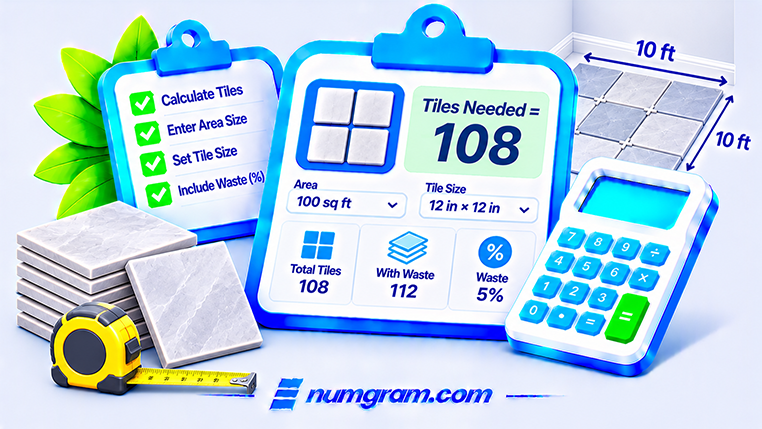
Measure the length and width of the area you plan to cover. Enter each measurement and choose its unit. Then enter the length and width of one tile, again choosing the unit for each dimension. The calculator converts compatible measurements before working out the areas, so you can enter a room in feet and a tile in inches without manually converting either one.
Add a waste allowance to cover cuts, breakage and small installation losses. Enter the number of tiles in one box. If you know the price of an individual tile, enter it to estimate material cost. Select Calculate to see the project area, area including waste, tile quantity, box quantity and estimated tile cost.
What Measurements Do You Need?
Project Length and Width
Measure the length and width of the floor or wall. For a rectangular area, use the longest side as the length and the perpendicular side as the width. Measure the actual surface to be tiled rather than relying only on a room’s advertised floor area. If the space has alcoves, recesses or other irregular sections, divide it into rectangles, calculate each section separately, and add the areas together.
Tile Length and Width
Use the actual face dimensions of one tile, not the dimensions of a carton. A nominal “12-inch” tile may differ slightly from its measured size. For a more accurate estimate, check the manufacturer’s product information or measure a tile from the batch you plan to install. Rectangular tiles can have different length and width values; square tiles use the same value for both.
Waste Allowance
The waste percentage increases the coverage area before tile quantity is calculated. A simple, open rectangular room with a straightforward layout may need less extra material than a room with many corners, narrow strips, diagonal patterns, niches or complicated cuts. The calculator does not prescribe one universal percentage. Choose an allowance appropriate to the tile, pattern, installer and room layout, and ask your installer or tile supplier when uncertain.
Tiles per Box and Price
Check the carton label. Packaging may state the number of tiles per box, the coverage per box, or both. Enter the tile count required by the calculator. If you enter a price per tile, estimated material cost is based on the rounded-up tile quantity. If the supplier sells only by the box, multiply the number of boxes by the actual box price instead; the per-tile estimate may not match a retailer’s package pricing, discounts, taxes or delivery charges.
How the Tile Estimate Is Calculated
- Project area: project length × project width, after converting both dimensions to a common unit.
- Area including waste: project area × (1 + waste percentage ÷ 100).
- Area of one tile: tile length × tile width, after converting both dimensions to the same unit.
- Tiles to purchase: round up (area including waste ÷ area of one tile) to the next whole tile.
- Boxes to purchase: round up (tiles to purchase ÷ tiles per box) to the next whole box.
- Estimated tile cost: tiles to purchase × price per tile, when a price is provided.
Rounding up is important because a partial tile cannot be purchased as a complete tile in most retail situations, and a partial carton is not always available. The box count is rounded separately so the estimate reflects whole cartons.
Worked Example: a 12 Ft by 10 Ft Room
Suppose a rectangular room is 12 feet long and 10 feet wide. The tiles are 12 inches by 12 inches, the waste allowance is 10%, and each box contains 10 tiles.
| Step | Calculation | Estimate |
|---|---|---|
| Project area | 12 ft × 10 ft | 120 ft² |
| Area with waste | 120 ft² × 1.10 | 132 ft² |
| Area per tile | 1 ft × 1 ft | 1 ft² |
| Tiles to purchase | 132 ft² ÷ 1 ft² | 132 tiles |
| Boxes to purchase | 132 ÷ 10, rounded up | 14 boxes |
If the tile price is $2.00 each, the estimated tile material cost is 132 × $2.00 = $264.00. This example excludes grout, mortar, underlayment, trim, tools, delivery, taxes and labor.
Tips for a More Accurate Tile Estimate
- Measure the actual surface in more than one place. Walls and older floors may not be perfectly square.
- Subtract large areas that will not be tiled, such as a substantial opening, only when you can measure them reliably.
- For irregular rooms, split the surface into smaller rectangles and total their areas.
- Consider the tile pattern. Diagonal, herringbone and other complex layouts can create more offcuts than a straight grid.
- Check whether tiles from different production batches may vary in shade or calibration. Buying a suitable extra quantity at the same time can help avoid a later mismatch.
- Confirm carton coverage and tile count with the supplier. Packaging details can vary by product.
- Keep a few suitable spare tiles after installation for future repairs, where practical.
Important Limitations
This calculator is a planning estimate for a rectangular surface. It does not create a cutting plan, optimise tile placement, account automatically for grout-joint width, tile direction, pattern repeats, unusable offcuts, substrate condition or multiple tile sizes. It also does not calculate grout, adhesive, leveling compound, trim, labor or installation costs. For complex projects, measure each surface separately and confirm quantities with a qualified installer or tile supplier.
Frequently Asked Questions
How Much Extra Tile Should I Buy?
There is no single waste percentage that fits every project. The right allowance depends on the room shape, tile size, layout pattern, installer technique and likelihood of breakage. A simple layout may require less extra material than a diagonal or intricate pattern. Ask your installer or supplier for a project-specific recommendation.
Can I Enter Feet for the Room and Inches for the Tile?
Yes. Choose the unit separately for each measurement. The calculator converts the measurements to a common basis before calculating area and tile quantity.
Why Does the Calculator Round the Tile and Box Quantities up?
Because you generally need whole tiles and whole boxes. If the calculation produces a fraction, the estimate rounds up so the planned purchase is not short by a fraction of a tile or carton.
Does the Estimate Include Grout and Adhesive?
No. It estimates tile quantity, cartons and optional tile material cost only. Grout and adhesive coverage depends on joint width, tile thickness, substrate and product instructions, so estimate those materials separately using the manufacturer’s coverage guidance.
Can I Use This Calculator for Walls?
Yes, the area calculation can be used for a rectangular wall as well as a floor. Measure the wall’s width and height, and use those as the area dimensions. Account separately for openings and any sections that will not be tiled.
Why Might My Supplier Recommend a Different Quantity?
A supplier or installer may account for the exact tile batch, grout joints, pattern, cuts, defects, carton coverage and site conditions. Treat this calculator as an initial estimate and confirm the final order with the people supplying or installing the tile.
Editorial note: This calculator provides an estimate, not a guaranteed purchase quantity. Confirm measurements, carton coverage and waste allowance before ordering.