How to Use the Loan to Value Calculator
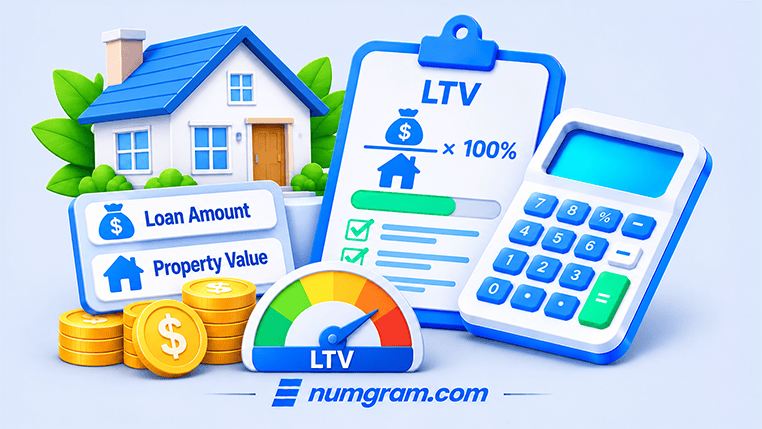
A loan-to-value ratio, commonly shortened to LTV, compares the amount borrowed against the value of the property securing the loan. Mortgage lenders use LTV as one factor when assessing a home loan, refinancing application or home-equity transaction. This loan-to-value calculator estimates the LTV percentage and the equity represented by the difference between the property value and the loan amount.
Enter the loan amount and the property’s current value using the same currency. The calculator returns the loan-to-value ratio, estimated equity amount and equity percentage. These are simple estimates based on the figures you enter; they are not a lender’s valuation or a loan approval decision.
Information to Enter
Loan Amount
Enter the amount of the mortgage or other property-secured loan you want to evaluate. For a new purchase, this is generally the amount you plan to borrow, not the full purchase price. For an existing mortgage, use the current outstanding principal balance rather than the original amount borrowed. If there are multiple loans secured by the same property, a lender may consider their combined balances when calculating a combined loan-to-value ratio. This basic calculator evaluates one loan amount at a time.
Do not include unrelated personal loans or credit card balances unless they are secured by the property and are part of the lender’s LTV calculation. If you are unsure which balances a lender will include, check the lender’s definition of the loan amount used for underwriting.
Property Value
Enter the estimated value of the property that secures the loan. For a purchase, this may be the agreed purchase price or a lender-accepted valuation, depending on the lender’s rules. For a refinance or an existing mortgage, use a current, supportable estimate. A lender may rely on an appraisal, automated valuation, broker price opinion or another accepted valuation method.
Use the same currency for both inputs. The calculation is a ratio, so the currency cancels out when the loan amount and property value are expressed in the same currency. Do not compare a loan amount in one currency with a property value in another.
Loan to Value Calculator Formula
The standard LTV formula is:
LTV (%) = (loan amount ÷ property value) × 100
The calculator also estimates the property’s equity:
- Equity amount = property value − loan amount.
- Equity percentage = (equity amount ÷ property value) × 100.
For a simple one-loan example where the loan is less than the property value, LTV and equity percentage add up to 100%. This relationship is a mathematical comparison, not a statement about how much cash you could receive by selling the property. Selling costs, taxes, other liens and market changes can affect the amount ultimately available.
Worked Example: an $320,000 Loan on a $400,000 Property
Suppose you are evaluating a $320,000 mortgage secured by a property valued at $400,000. Divide the loan amount by the property value and multiply by 100. The resulting LTV is 80%. The difference between the property value and the loan amount is $80,000, representing 20% equity based on these inputs.
| Item | Calculation | Estimate |
|---|---|---|
| Loan amount | Entered amount | $320,000.00 |
| Property value | Entered amount | $400,000.00 |
| Loan-to-value ratio | ($320,000 ÷ $400,000) × 100 | 80.00% |
| Equity amount | $400,000 − $320,000 | $80,000.00 |
| Equity percentage | ($80,000 ÷ $400,000) × 100 | 20.00% |
The example assumes one loan and a property value of $400,000. It does not include closing costs, other liens, transaction expenses or changes in market value.
Why LTV Matters
Lenders often use LTV to understand how much of a property’s value is being financed. A lower LTV generally means the borrower has more equity relative to the loan, while a higher LTV means the loan represents a larger share of the property’s value. LTV may influence loan eligibility, pricing, mortgage insurance requirements, available products and refinancing options. The rules vary by lender, loan type, occupancy, property type and jurisdiction.
There is no single LTV threshold that guarantees approval or a particular interest rate. Some loan programs permit higher LTVs when other eligibility requirements are met. Others may require a lower ratio or additional protections. Lenders also review credit history, income, debts, assets, property condition and repayment ability.
LTV, Down Payment and Equity
For a straightforward purchase with one mortgage and no other property liens, the down payment percentage is often the complement of the starting LTV. For example, an 80% LTV purchase commonly corresponds to a 20% down payment, assuming the purchase price is the value used in the calculation and no other financing changes the structure.
Equity is the portion of the property’s value not represented by the loan balance. It can change as you repay principal or as the property’s market value rises or falls. A higher property value can reduce the calculated LTV even when the loan balance is unchanged. Conversely, a decline in property value can increase LTV without any additional borrowing.
For an existing mortgage, current equity is not necessarily the same as the cash you could borrow. A lender may limit borrowing based on its maximum LTV, subtract existing liens, require closing costs and apply other underwriting conditions.
Combined Loan-to-Value (Cltv)
If more than one loan is secured by the property, a lender may use a combined loan-to-value ratio. CLTV generally compares the combined balances of relevant property-secured loans with the property’s value. A home-equity line of credit may also be assessed using its credit limit under some lender methods, rather than only the amount currently drawn. This calculator does not calculate CLTV, so do not treat its result as a combined-lien assessment.
Ways to Improve Your LTV
- Make additional principal payments if your loan terms and budget allow.
- Compare the current loan balance with a credible, up-to-date property valuation.
- Avoid taking on additional property-secured debt without understanding its effect on combined LTV.
- Review lender requirements before paying for an appraisal or applying to refinance.
- Keep records of improvements, but remember that renovation spending does not automatically increase market value by the same amount.
Do not assume that an online estimate or a recent listing price will be accepted by a lender. The lender’s valuation method and underwriting policy determine the figures used for an actual application.
Assumptions and Limitations
This calculator assumes one loan and one property value, with both amounts entered in the same currency. It calculates LTV as loan amount divided by property value and estimates equity as the difference between those amounts. It does not account for second mortgages, home-equity lines, other liens, lender-specific CLTV rules, appraisal adjustments, selling costs, taxes, fees or loan program requirements.
If the loan amount is greater than the property value, the calculated LTV will exceed 100% and estimated equity will be negative. This can occur in an underwater-loan scenario. A negative equity estimate is a mathematical result and does not by itself determine legal obligations, foreclosure outcomes or lender remedies. The result is educational and should not be treated as a loan offer, appraisal or financial recommendation.
Frequently Asked Questions
What Is a Loan-To-Value Ratio?
LTV is the loan amount expressed as a percentage of the property’s value. It helps show how much of the property value is financed by the loan.
What Is a Good LTV?
There is no universal ideal. Lower LTV can provide more equity and may help with some loan terms, but acceptable thresholds depend on the loan program, lender, property and borrower qualifications.
Does an 80% LTV Mean I Have 20% Equity?
For a simple calculation with one loan and no other liens, yes: 80% LTV corresponds to 20% equity relative to the entered property value. Other secured debts may reduce the equity available to you.
Should I Use the Purchase Price or Appraised Value?
Use the value required by the lender for the relevant transaction. Some lenders use the lower of purchase price and appraised value for certain purchase calculations. Confirm the lender’s method rather than assuming one figure applies to every loan.
Can LTV Be More Than 100%?
Yes. If the loan balance is greater than the property’s value, LTV exceeds 100% and the simple equity calculation is negative. This is often described as negative equity or an underwater mortgage.
Does This Calculator Include a Second Mortgage?
No. It evaluates one loan amount. For multiple property-secured loans, ask the lender how it calculates combined loan-to-value and which balances or credit limits it includes.
Does a Lower LTV Guarantee a Lower Interest Rate?
No. LTV is one underwriting factor. Credit profile, income, debt, property type, loan purpose, market conditions and lender pricing also matter.
Can I Use This Calculator for Refinancing?
Yes, as a basic estimate. Enter the current or proposed loan amount and a current property value. A lender may use an appraisal or other valuation and may include additional liens in its review.
Editorial note: This calculator is for educational purposes only. Confirm the applicable valuation and underwriting rules with your lender before making a borrowing decision.